
From concept and design through integration, delivery and ongoing operations, Layer 2 Intelligence brings together the engineering, technology and operational expertise needed to deliver reliable critical infrastructure.
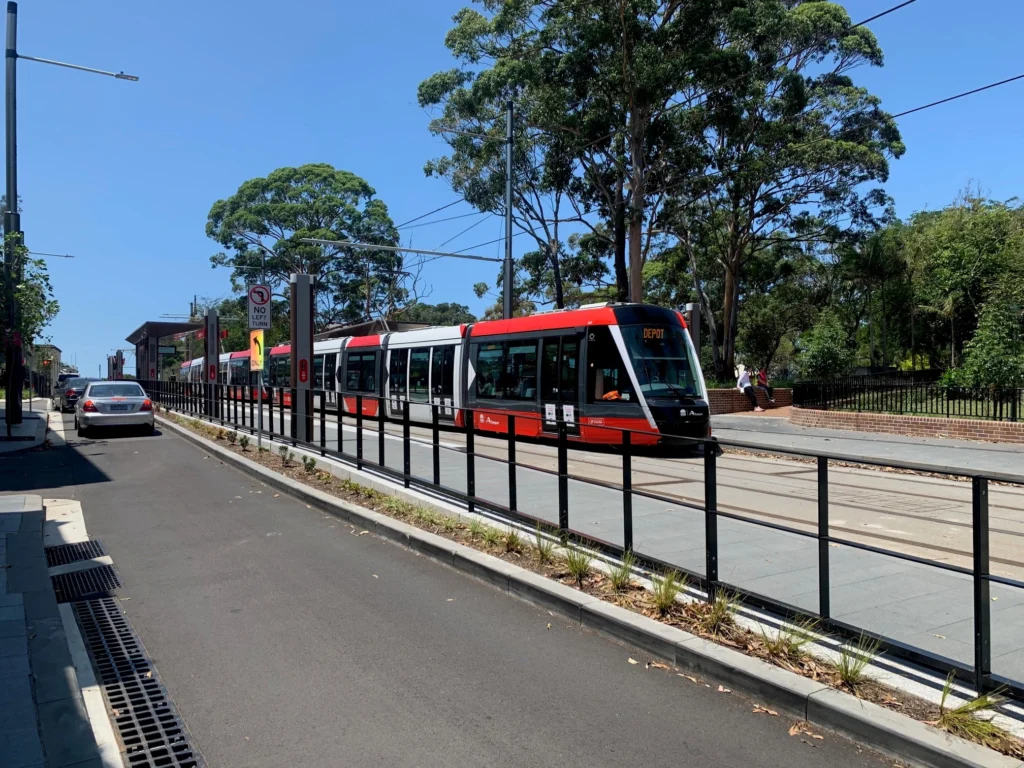
From the first idea to the everyday operation of a live network, we bring complex technology together and make it work.
Layer 2 Intelligence is a specialist integrator, deliverer and maintainer of operational technology. Our experience spans rail, roads and critical infrastructure, giving clients the practical expertise to plan, deliver and support systems across their full lifecycle.
Explore how we help infrastructure owners, operators, and delivery partners solve complex technology challenges through engineering, systems integration, cybersecurity, and operational technology expertise.
SCADA sits at the heart of live operations. L2iQ designs, integrates, installs and commissions SCADA and monitoring solutions across all control environments, giving control-room operators real-time visibility and command over dispersed critical infrastructure. We have delivered SCADA integration, testing and commissioning on major programmes across rail, roads, renewables and utilities.
The data network underpins everything — SCADA, signalling, security, information systems, video and mission-critical communications. It must be always-on, fully redundant and move terabytes of data without fail. L2iQ delivers across the full stack: fixed networks, mobile networks, and voice and data transmission, from design and commissioning through to long-term maintenance.
L2iQ brings expertise across the full spectrum of radio solutions, from high-bandwidth combined voice and data systems through to long-range voice communications. Our work includes Track-to-Train radio for light rail, GSM-R for heavy rail, TETRA and P25 networks, passenger Wi-Fi deployment, telemetry and remote CCTV communications.
A single facility can host hundreds of cameras, access points and sensors spanning multiple subcontractors and technology platforms. L2iQ has extensive experience in designing and integrating CCTV, access control, intrusion detection, crowd control systems, facial recognition and thermal cameras in operational environments. We know where complex security integrations break and how to stop that from happening.
L2iQ helps clients develop a unique suite of information systems to effectively communicate with customers across a variety of scenarios and environments. This includes Passenger Information Displays (PID), Public Address (PA) systems, Passenger Information Systems (PIS), hearing loops, help points and dynamic message signs.
OT cyber security is a fundamentally different discipline from IT cyber security, and L2iQ exists specifically at this intersection. In IT environments, the priority is typically data confidentiality — protecting business information. In OT environments, the priority is availability and safety — a cyber incident that takes a SCADA system offline, disrupts rail signalling or compromises a power or water control system has immediate physical consequences for people, assets and the public. Standard IT security tools cannot simply be applied to OT systems, which often run legacy protocols, cannot be freely patched or rebooted, and must remain available continuously. L2iQ applies a structured, standards-aligned approach to protecting mission-critical OT systems across the full security lifecycle — from initial threat assessment and OT-specific security architecture design through to network monitoring, intrusion detection, incident response and regulatory compliance. We are a Technically Assured Organisation (TAO) for Cybersecurity with Transport for NSW and have deployed Nozomi OT security monitoring integrated with CSOC operations on major transport programmes.
Yes. L2iQ has advised major infrastructure operators on unlocking commercial revenue from their telecom assets, including commercialisation strategy, carrier engagement across hosting and connectivity opportunities, market analysis and full procurement support through to contract award.
Partner with specialists in Operational Technology, Cybersecurity, Systems Integration and Critical Infrastructure
Operational Technology (OT) infrastructure refers to the hardware and software systems that directly monitor, control and manage physical devices, processes and assets in the real world. This includes SCADA systems controlling a water treatment plant, communications networks on a rail line, tunnel management systems on a motorway, energy management systems on a solar farm, and the field devices, sensors and control networks that connect them all. Unlike IT (Information Technology), which manages data and business applications, OT systems interact directly with physical infrastructure — and their failure has immediate, real-world consequences for safety, service and people. L2iQ specialises exclusively in OT infrastructure across transport, energy, utilities and critical facilities.
IT (Information Technology) manages data, email, ERP systems, corporate networks, databases. OT (Operational Technology) controls physical infrastructure — trains, tunnels, pumping stations, power substations. The difference matters enormously in practice. IT systems can typically be taken offline for maintenance with limited consequences. OT systems often run continuously, cannot be rebooted during operations, and must function safely in harsh physical environments for decades. The protocols, architectures and engineering disciplines are fundamentally different. Many infrastructure projects go wrong when IT firms or generalist engineers apply IT thinking to OT problems — producing systems that are fragile, insecure in OT-specific ways, or simply don't perform as intended in a live environment. If your project involves controlling or monitoring physical infrastructure, you need OT-specific expertise from the start.
SCADA stands for Supervisory Control and Data Acquisition. It is the software and hardware platform that gives control-room operators real-time visibility and command over dispersed physical assets — whether that's a network of pumping stations, a rail network's traction power system, a road tunnel's ventilation and safety systems, or a renewable energy farm's generation assets. SCADA collects data from field devices (sensors, PLCs, RTUs), displays it on operator workstations, and enables operators to issue control commands remotely. In mission-critical environments, SCADA must be always-on, fully redundant and protected from both technical failure and cyber threats. L2iQ designs, integrates, installs and commissions SCADA systems across rail, roads, renewables and utilities.
An OT systems integrator is the specialist who makes all the individual technology systems on a project work together as a single, reliable whole. On a major infrastructure project — a light rail network, a road tunnel, a renewable energy site — there are typically dozens of separate OT systems from different vendors: SCADA, radio, CCTV, access control, passenger information, communications networks, fire and life safety, and more. Each vendor is an expert in their own system, but nobody is accountable for how they all interact. The systems integrator takes that accountability — designing the interfaces, managing the data flows, verifying that each system performs correctly within the integrated whole, and leading the testing and commissioning phase that proves it all works. This role is critical and frequently underestimated in project planning. L2iQ has fulfilled this role on some of Australia's largest and most complex infrastructure programmes.
Any time a project involves systems that control or monitor physical infrastructure in a live, mission-critical environment. The clearest signals are: systems that must be always-on (no maintenance windows); legacy equipment that cannot be patched or updated; environments with safety-critical consequences if a system fails; multi-vendor technology landscapes that must be integrated; or projects where the prime contractor or OEM lacks in-house OT depth. In practice, this includes almost all transport, utilities, energy, water and critical facilities projects of meaningful scale. Bringing a generalist in late — after design decisions are already made — is one of the most expensive mistakes in infrastructure delivery. L2iQ is frequently engaged to resolve problems that arise from exactly this situation, and consistently advocates for early OT specialist involvement.
An OT system's lifecycle begins well before any equipment is installed and continues long after commissioning. End-to-end lifecycle management covers: feasibility and business case (what systems do we need and why?); concept and detailed design; procurement and vendor management; installation and integration; testing and commissioning; operations and maintenance; and eventually, system upgrade or decommissioning. Many organisations engage OT specialists only at the installation stage, missing the value available at the front end — where design decisions lock in costs and risks — and at the back end, where ongoing maintenance is often under-resourced. L2iQ covers the full lifecycle and can be engaged at any stage.
Commissioning is the process of verifying that all systems — individually and as an integrated whole — perform as designed in a live operational environment. In OT infrastructure, this is significantly more complex than in IT, because the systems interact with physical assets and safety-critical processes. A commissioned SCADA system must correctly reflect the real physical state of assets in the field. A commissioned radio system must provide reliable coverage in tunnels, at speed, through electromagnetic interference. Passenger information systems must display the right data from the right source at the right time. Getting this wrong in a test lab is a manageable problem. Getting it wrong in a live operational environment can stop a train, close a tunnel, or trigger a safety incident. L2iQ has led testing and commissioning on some of Australia's most technically complex infrastructure programmes and applies a rigorous, structured methodology to every engagement.
Start by distinguishing OT specialists from general IT or engineering firms — the discipline is different enough that broad engineering credentials do not substitute for operational technology experience. Look for verifiable project references in mission-critical environments (transport, utilities, energy), evidence of senior-led delivery (not junior resources supervised from afar), and accreditations relevant to the sector (for example, Transport for NSW's Technically Assured Organisation scheme for cyber security). L2iQ is nationally resourced across NSW, Victoria, Queensland and the ACT, has supported in excess of $11B in infrastructure programme value, and is available to discuss project requirements at Director level from first contact.